

Part 1 of 3 · ai-readiness
AI readiness is a documentation readiness issue
AI readiness conversations largely focus on tools and ROI, but documentation structure and maintenance determine the reliability of AI systems.

Most AI readiness plans are missing a page.
Organizations are investing heavily in models, workflows, and adoption strategies, but conversations centered on tools and ROI often overlook a crucial component of the plan: documentation.
Why AI outcomes often disappoint
The quality and structure of documentation determine how well AI performs. Poorly structured documentation undermines claims of AI readiness.
A common assumption is that a sufficiently powerful model can navigate messy internal documentation and still produce the right answer, but that assumption is often incorrect.

Humans can work around messy documentation because we carry context. We remember which document is outdated, know when a process changed, and recognize when an explanation was written for a situation that no longer applies.
AI systems don’t have that background knowledge. Most enterprise AI tools simply search internal sources, retrieve several pieces of content, and generate answers from what they find. If sources conflict, AI may combine them.
For example, when one document mentions a refund window of 14 days, and another mentions30 days, AI could respond with something like:
Refunds are typically available within 14 days, though in some cases, refunds may be issued within 30 days, depending on the purchase type.
The resulting statement, though reflecting two distinct policies, arrives directly from internal documentation.
Documentation containing overlapping versions, partially updated instructions, or unresolved contradictions leads AI systems to reproduce those inconsistencies at scale. A well-defined hierarchy helps the system avoid amplifying existing confusion.
Documentation is AI’s source code
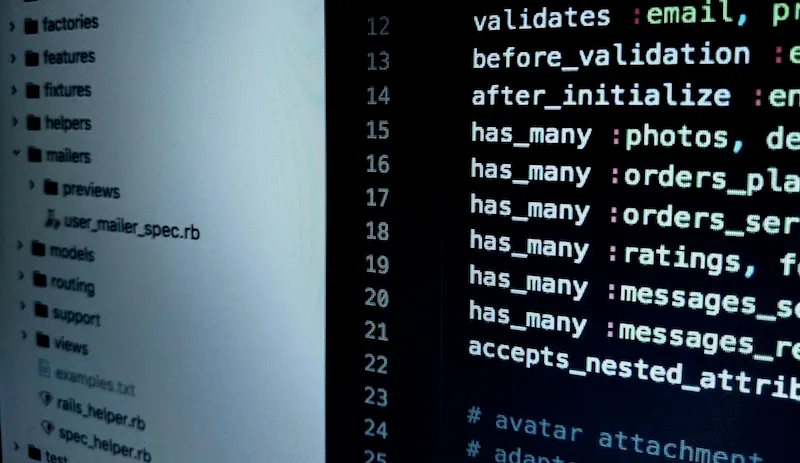
In the pre-AI era, documentation was frequently treated as a secondary concern, a nice-to-have for onboarding or as a reference for when things broke. Today, documentation is the reference layer for AI systems, serving as the source code for AI behavior.
Reliable AI behavior is interpretable without guesswork, achievable through well-structured, well-maintained documentation. True AI readiness treats documentation as an underlying product, designed to be interpreted reliably by changing systems over time.
What AI readiness really looks like
Getting better results from AI means looking beyond the hype and paying closer attention to the structure of your documentation. A few specific pillars help determine whether an AI system will succeed and evolve with its product:
- Information architecture prioritizes intent and scoping. Clearly define where one topic ends and another begins, so the system does not bleed contexts together.
- Accuracy is king. Your engineers need to contribute to and verify documentation. AI models won’t discern whether concepts or codes are accurate; they will just hand them to your customers.
- Content models must provide predictability. Every page should follow a consistent structure that makes it easy for AI to identify headers, steps, and requirements.
- Metadata should act as a guardrail. Signals such as versioning, expiration dates, and explicit source-of-truth identifiers help AI systems prioritize relevant information.
- Maintenance discipline encourages reliability. Without a process for retiring old information, you are poisoning the well for future AI agents.
These critical elements are rarely discussed in AI readiness articles, often created by AI integration and development teams, despite their significant impact on AI system reliability.
Each of these will be covered in greater detail within an upcoming article. It is also worth noting that AI depends on them simultaneously, not selectively.
AI-retrievable documentation in practice
The following platforms exemplify documentation structured for AI systems to reliably access:
Stripe documentation separates conceptual guides, API references, and tutorials into clearly defined layers. Most pages focus on a single task or concept, which keeps related material tightly scoped.
Kubernetes documentation organizes material around tasks, concepts, and references. A consistent hierarchy makes it easier for AI systems to quickly locate the right information.
An uncomfortable question
When signing a contract with an AI vendor, a key question arises: Can a system consistently interpret your documentation without relying on human intuition?
Documentation that can’t be interpreted consistently can’t be rescued by prompt engineering or model fine-tuning. AI does not raise the bar for your documentation. It simply shows whether you ever met the bar.
Continue reading
Related posts from the studio.
 AI-ReadinessPart 2 of 3
What makes AI-ready documentation
What does AI-ready documentation actually require? Part 2 of our AI readiness series breaks down the five structural components that determine whether AI systems can reliably interpret your docs.
6 Min. Read
 AI-ReadinessPart 3 of 3
Why most teams can't maintain AI-ready documentation
AI-ready documentation degrades without someone structurally responsible for maintaining it. Most product teams don't have that person.
6 Min. Read
 AI-Readiness
The role AI can't fill
Shipper's pirate/architect framework for AI-era teams is missing a third role. Here's what it uncovers, why it keeps getting cut, and why that matters more than ever.
4 Min. Read
Not ready to start yet?
Join the DevDocs Brief
Occasional notes from the studio: new articles, case studies, and documentation strategy updates.
See selected emailsReady to start?
Tell us about your documentation challenge.
We respond within one business day.